kyle hobson
Menu

UX RESEARCH · QUESTIONS THAT MOVE WORK FORWARD

Listen closely.
Change the question.

I’m Kyle, a UX researcher who helps teams understand what people need and what the evidence actually supports. I connect surveys, qualitative research, and product evaluation to decisions a team can act on.

Currently reviewing SmartTagIt with FactorLab and contributing research at Oppia.

Oak AI · Creator audience research
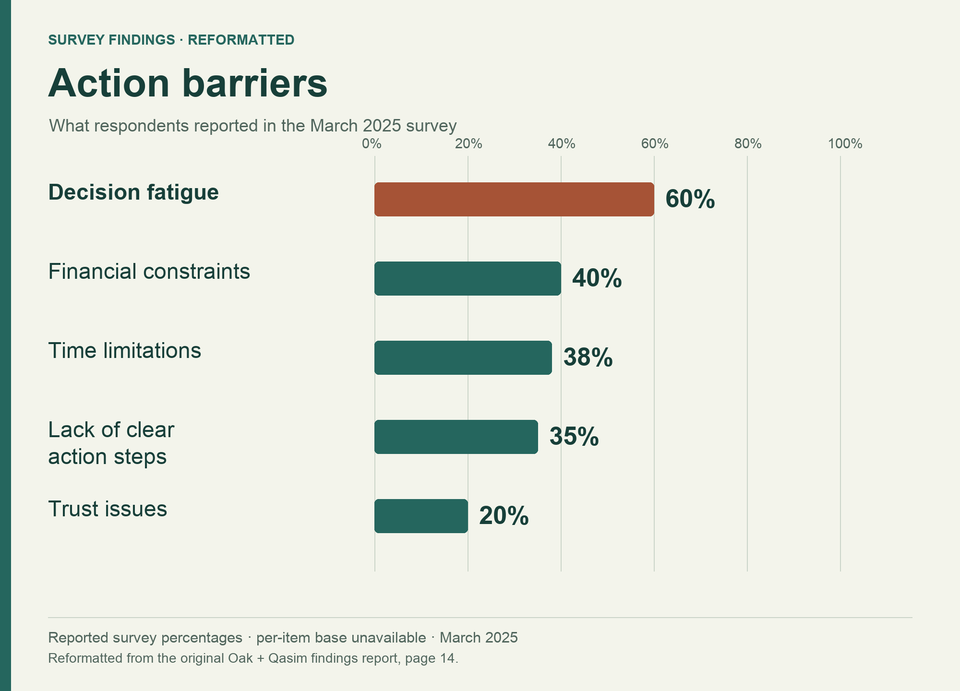
Reformatted chart of reported survey barriers: decision fatigue 60%, financial constraints 40%, time limitations 38%, unclear action steps 35%, and trust issues 20%.
Featured work When interest does not become action.
SELECTED EXPERIENCE

FactorLabUX Designer & Researcher (Contract)

Oak AILead UX Researcher

ASU Learning InnovationsAI Analyst

ASU Knowledge EnterpriseInstructional Designer

Oppia FoundationUX Research Lead, volunteer

SELECTED WORK

Three questions. Three ways to find a useful answer.

Follow the work from the problem to the decisions that shaped it.

Compare the research approaches Survey analysis, community research and heuristic evaluation.

RECENT PRACTICE · FACTORLAB · 2026

Make a finding possible to reproduce.

In a SmartTagIt desktop audit, I separated repeatable defects from behavior I could not reproduce. When the product lead asked for more context, I paired short recordings with issue IDs and severity so engineering could inspect the trigger and proposed response together. The April 2026 exchange records the handoff and the team’s plan to act on it.

Follow the finding into the handoff
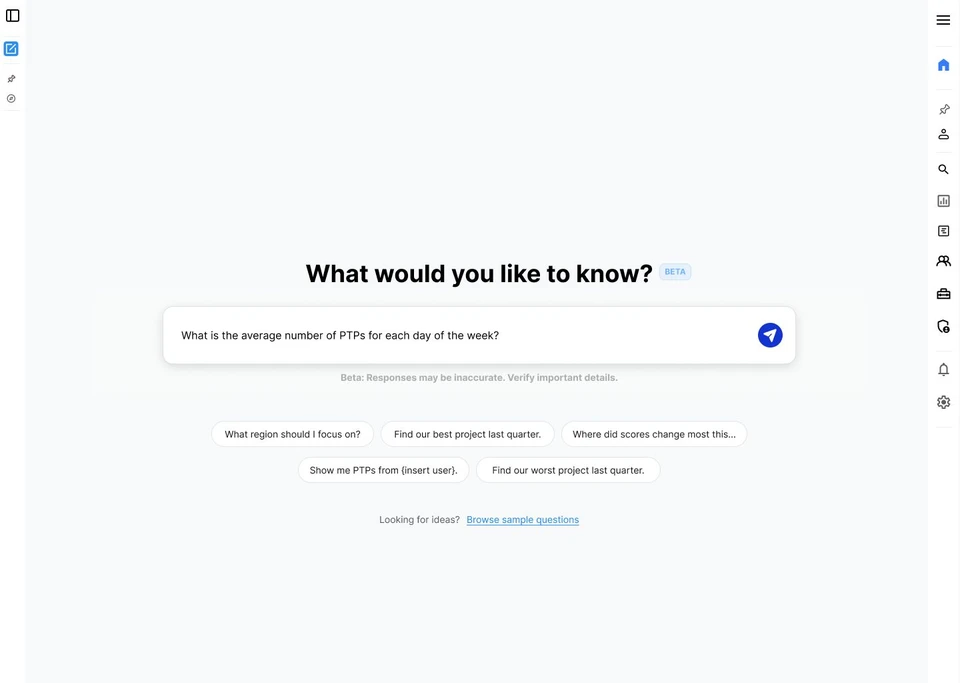
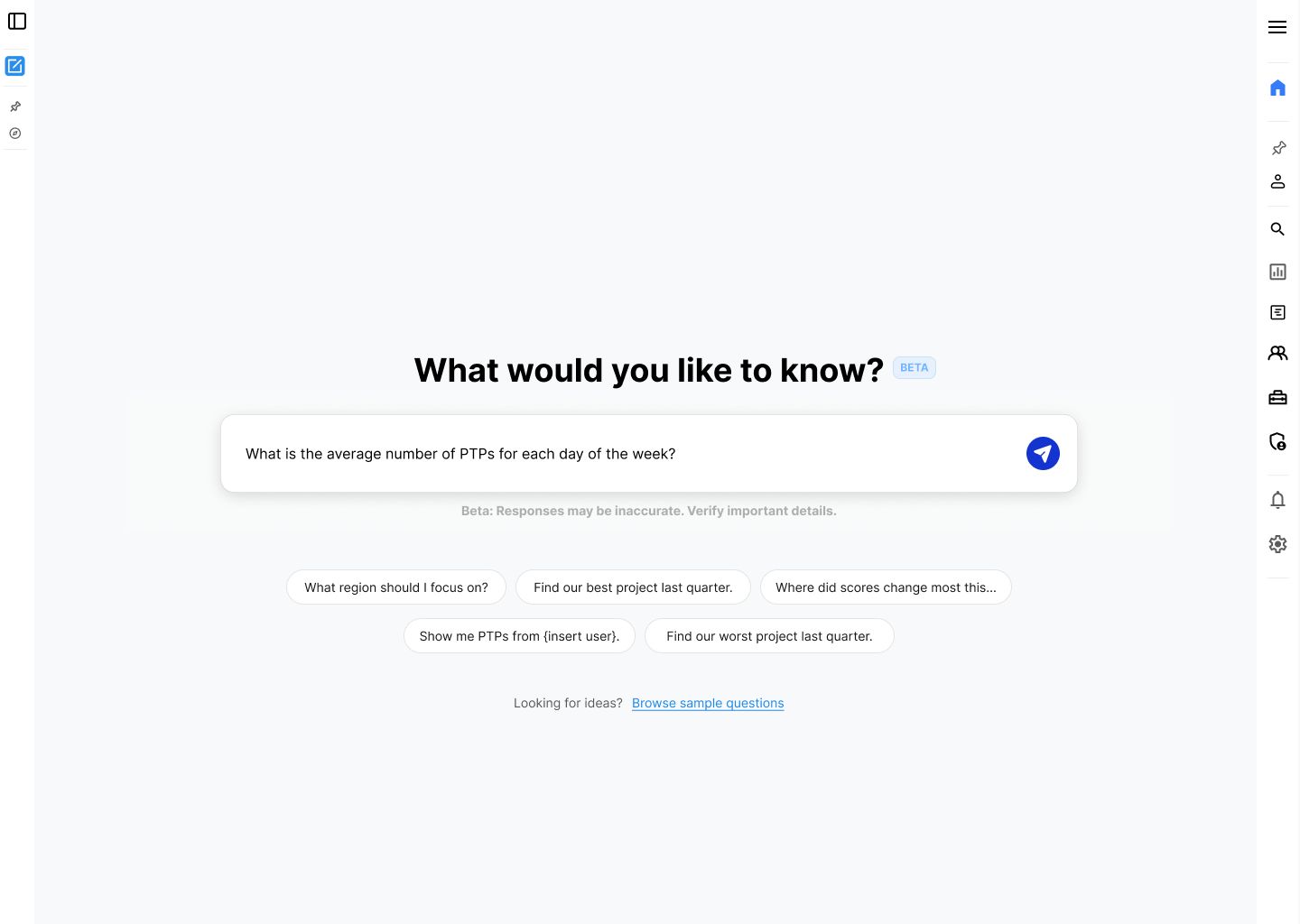
Original Flint desktop design exploration with suggested questions and a populated question field.
Original product design artifact. The linked case documents the 2026 evaluation and engineering handoff; this screen is not a recording of the audited behavior.

THE THREAD THROUGH MY WORK

Before I studied products,
I studied stories.

Kyle Hobson, supplied portrait.

A good question can change
the whole story.

Documentary filmmaking taught me to stay curious when someone’s experience did not fit the story I expected. That habit still guides my research: listen carefully, look for the exception, and be willing to change the question.

My background spans communication, learning design, and UX research. In the Oak work, those interests meet in practical questions: does a requested feature address the barrier people described? Does an explanation of privacy answer a concern about control? What evidence would change the team’s next step? I like making those questions specific enough to investigate together.

I work across product research and design, and volunteer as a UX Research Lead at Oppia. Away from work, I run tabletop games. Facilitation, pacing, and leaving room for quieter voices matter there too. It is another place where listening changes what happens next.

MS, User ExperienceArizona State University · 2024 Also: UX communication, electronic media,
and a lifelong interest in how people think.

Research that helps a team choose.

Frame the uncertainty

Turn a broad product concern into a research question, then choose a method that can answer it.

Connect the evidence

Read patterns across survey responses, qualitative material, and product behavior while keeping the limits visible.

Make the decision usable

Bring findings into a product discussion through clear synthesis, recommendations, and a focused next test.

How research moves with the team

Methods matter. So does making the next decision clear.

How do you help when requirements disagree?

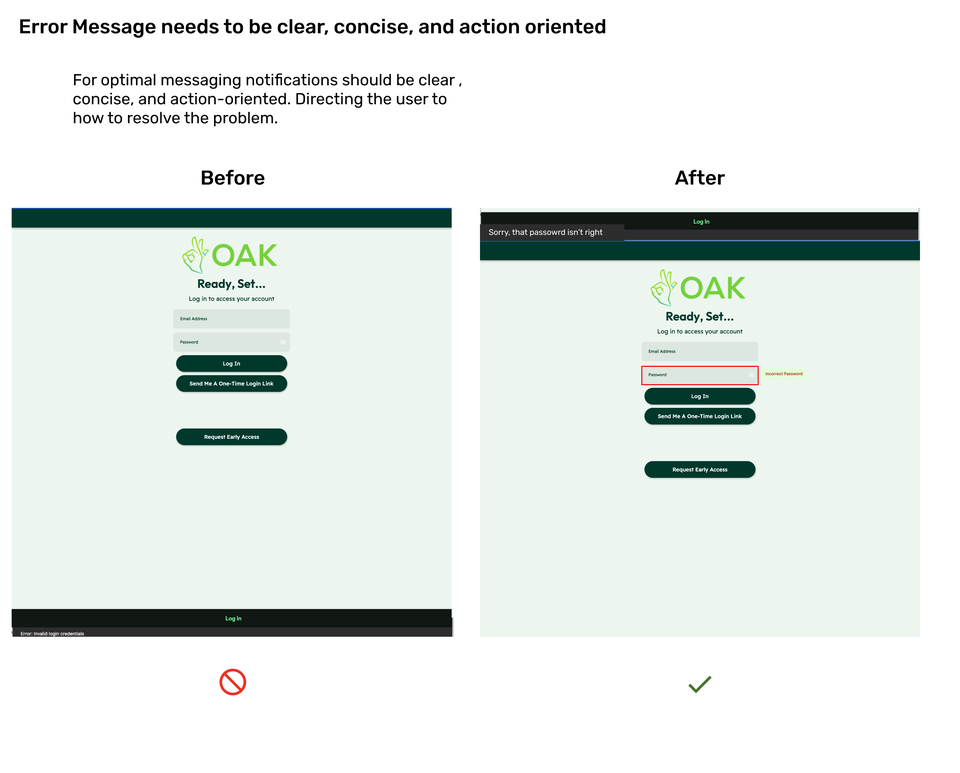
In an Oppia lesson-player review, I flagged conflicting exit-dialog copy and button emphasis, then asked engineering to clarify when progress actually saves. I separated those open questions from recommendations about narrow layouts. That gave the team a focused set of decisions to resolve before implementation.

See how I connect evaluation to a team’s backlog
When would you change the research plan?

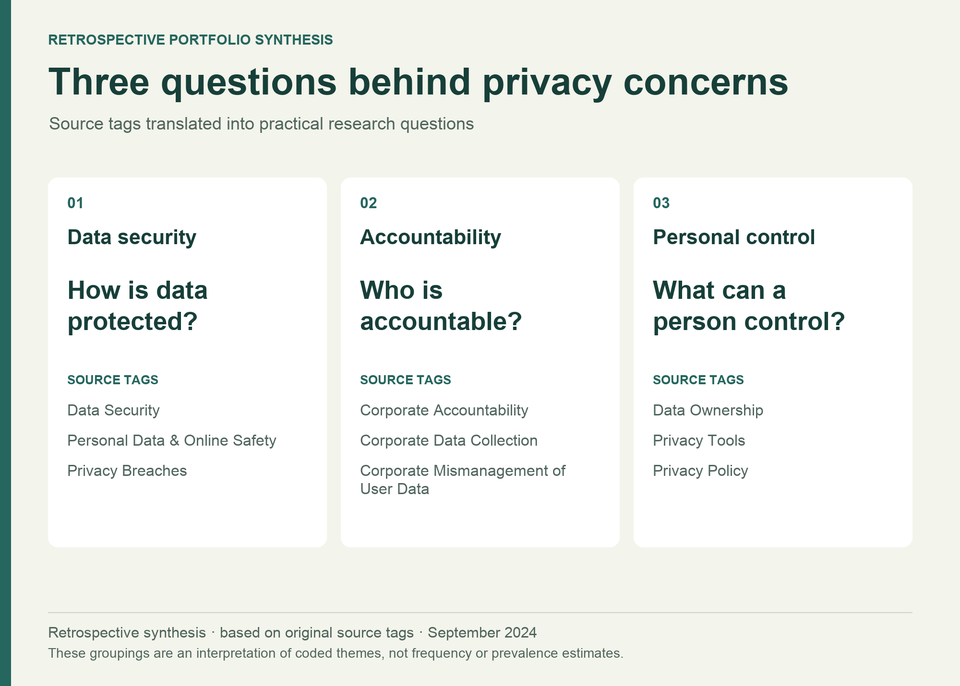
When the evidence challenges the premise. Oak’s privacy-community material raised concerns about control and company behavior, beyond understanding policy language. I used those themes to question whether deeper work with the same audience was the right next investment. The partial record supports that question, not a market-fit verdict.

See the research-direction decision
How do you keep findings useful without overstating them?

I separate the observation, my interpretation and the product decision it might inform. In the audience survey, reported barriers led to proposals for clearer steps, templates and reminders. Those proposals are visible alongside the sample limits; the survey does not prove that the proposed product changed behavior.

Follow the survey from evidence to recommendation

TAKE THE STORY WITH YOU

The UX Research package.

A concise career overview and a visual walkthrough of the work.

A GOOD PLACE TO START

What does your team need to understand?

For UX research, product research, research operations, and contract collaborations.

Mesa, Arizona · Open to remote collaboration LinkedIn GitHub
Open original