
 Selected work
Coursera · Guided Project / AI EDUCATION · ENABLEMENT
Teach the habit behind a useful prompt.
A published Coursera project teaches beginners to draft, compare, and revise social content through a fictional café brief.
2 min overview · optional detail below
THE CHALLENGE
Beginners can get an AI answer without knowing how to judge or improve it.
MY CONTRIBUTION
I created and taught a one-hour Guided Project, using a fictional café and a content plan to give each revision a purpose.
01 / Workflow decision
Give the learner a task they can recognize.
Brew Bliss gives learners a concrete task. The original lesson shows the first draft, the revision request, and the changed output so the effect of an instruction is visible.
Start with something to inspect.
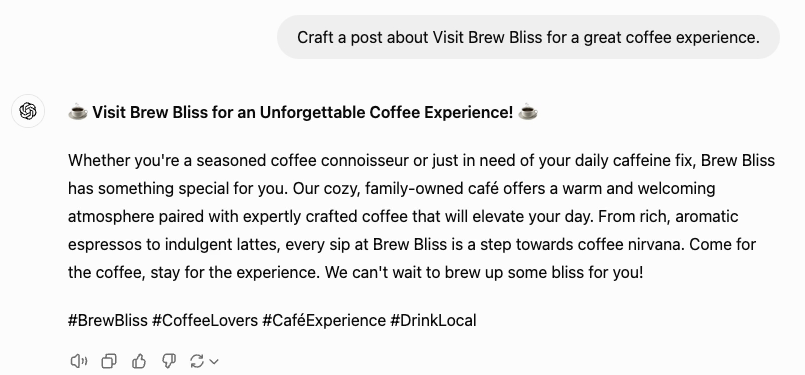
Original 2024 recording, Task 3. Prompt and initial draft visible at 03:35; Brew Bliss is a fictional practice brand.
Inspect screen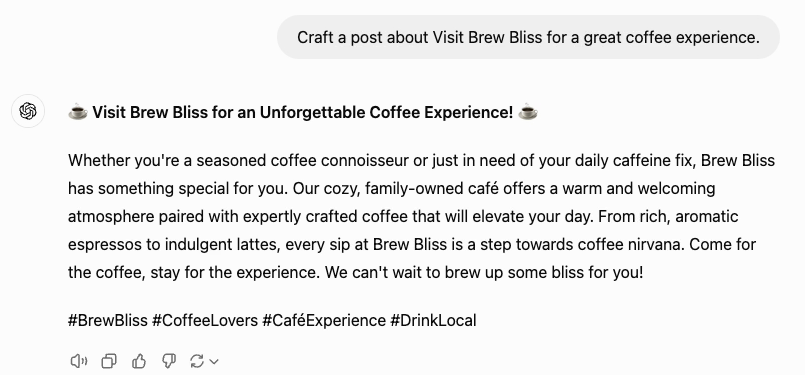
Name the change you want.

Original revision being prepared at 03:35. The full visible instruction, including its original wording and typos, is preserved.
Inspect screen
More detail creates more to judge.
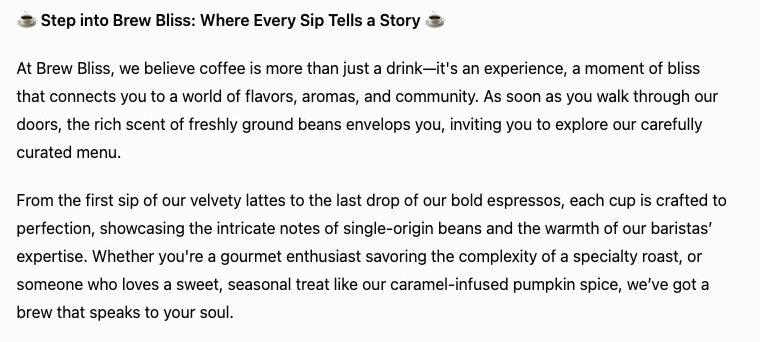
Original subsequent output at 04:00: headline and first two paragraphs. This is a changed demonstration draft, not a verified marketing result.
Inspect screen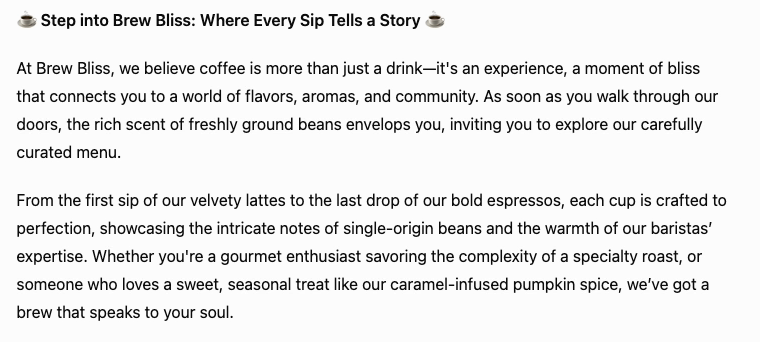
Decision notes and evidence
Alternatives and constraints
- Alternatives
- Beginning with a fully specified prompt would hide the decisions that make the instruction useful. This example keeps the first request simple, then makes the revision visible.
- Constraints and tradeoffs
- The familiar subject lowers the barrier to practice, but it is still a fictional scenario. The model’s claims about the café need to be treated as generated draft material rather than verified business facts.
Evidence behind this account
At 03:35 in the original Task 3 recording, the initial request and its first generated post remain visible above the revision composer.
02 / Workflow decision
Make revision the activity.
Revision is an activity: ask for specific qualities, compare the change, then inspect the new details. A more vivid draft still needs a factual check.
Decision notes and evidence
A visible request, followed by a visibly different draft
Can you make this more engaging and inviting? Include sensory details and a friendly tone.
| Requested change | What appears in the 04:00 output | What still needs judgment |
|---|---|---|
| Sensory details | The response describes the scent of freshly ground beans, velvety lattes, and bold espressos. | Do those descriptions match the fictional brief or a real business’s verified offer? |
| An engaging, friendly invitation | The response addresses the reader directly and opens with “Step into Brew Bliss.” | Is the voice appropriate for the brand and audience? |
| Context about coffee audiences | The response speaks to gourmet preferences and sweet seasonal-drink preferences. | This context came from a demonstration brainstorm, not audience research. |
| A stronger post | The resulting draft is much longer than the starting version. | Does the added detail serve the post, or should the next revision reduce it? |
The instruction excerpt is exact; the screenshot preserves the full visible instruction, including its original typos. The output crop contains the heading and first two paragraphs, not the complete answer.
Alternatives and constraints
- Alternatives
- A request to simply make the draft better leaves the desired change open. The visible revision makes several of those preferences explicit and adds coffee-audience context.
- Constraints and tradeoffs
- Adding context changes both the description and the amount of text. The second output gives the learner more specific material, but it also creates more detail to verify and a longer draft to edit for the intended platform.
Evidence behind this account
The revision instruction is visible in the composer at 03:35. By 04:00, the recording shows the subsequent output, headed “Step into Brew Bliss: Where Every Sip Tells a Story.” The stills document a teaching sequence, not a controlled comparison holding every other variable constant.
03 / Workflow decision
Leave a process the learner can repeat.
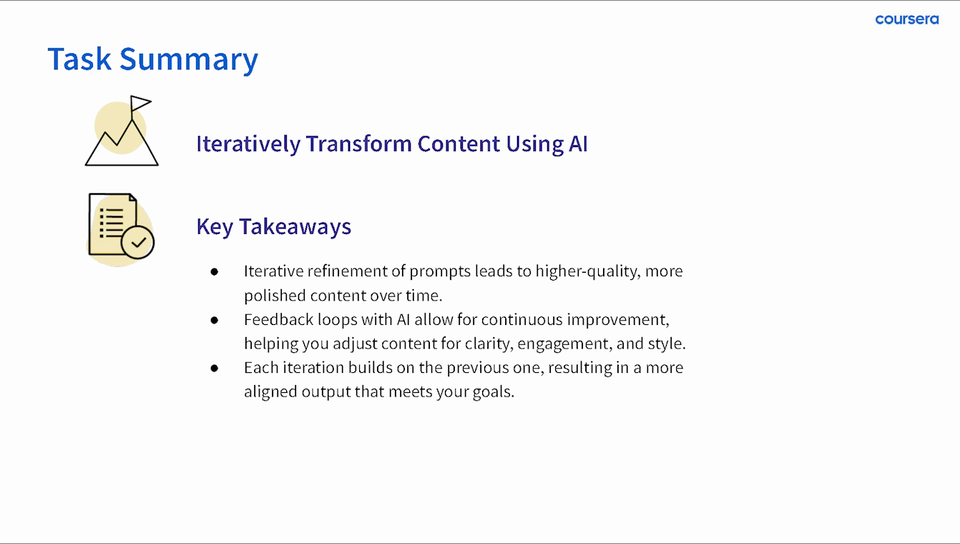
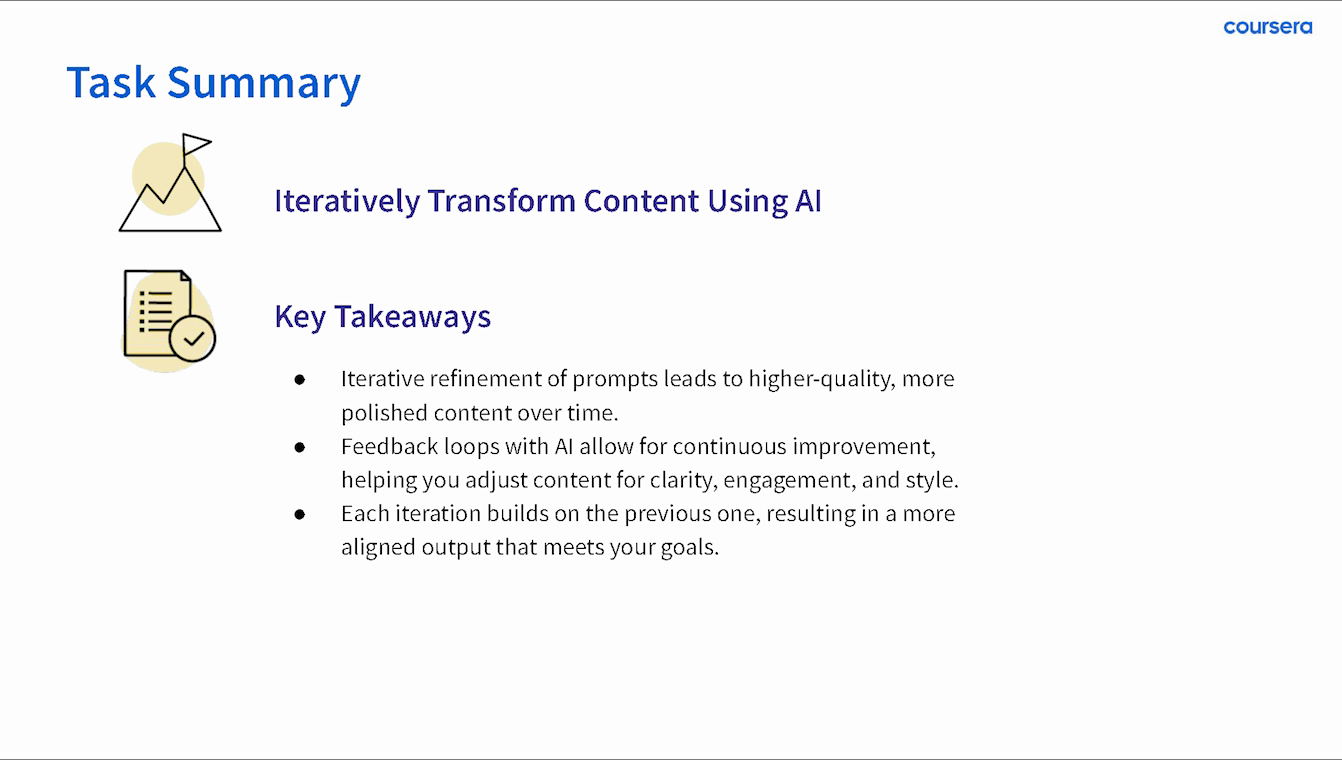
The project ends with a weekly content plan and optional independent practice. The artifact gives learners something to build; enrollment does not establish mastery.
Decision notes and evidence
Questions I would use to test transfer
- What is this piece of content supposed to help the audience do?
- Which detail in the output is unsupported or does not fit the brief?
- What one instruction would you change, and what difference do you expect?
- How will you decide whether the next draft is useful enough for the intended post?
Proposed transfer assessment based on the recorded draft–review–revise activity. These questions are a portfolio retrospective, not a reported learner study.
The published project has 4,700+ enrollments as of September 2026. Enrollment is not completion or demonstrated skill improvement.
Alternatives and constraints
- Alternatives
- A collection of finished example prompts would give learners something to copy. The guided activity instead makes the initial draft, revision request, and changed output available to inspect.
- Constraints and tradeoffs
- Following a demonstrated sequence is easier than applying it independently. A completed lesson or enrollment count cannot tell us whether a learner can choose useful constraints for a new task.
Evidence behind this account
The original Task 3 summary and official project curriculum support the activity and calendar connection. The prompts below are a retrospective review checklist drawn from this example, not a claim that these exact assessment questions were used in the course.
WHERE IT LANDED
A public learning experience people can work through.
The guided project is published on Coursera with my instructor attribution and more than 4,700 enrollments as of September 2026. It gives beginners a hands-on sequence for developing and revising AI-assisted content.
What I learned and would test next
Teaching makes the small decisions visible. A learner needs to see what to look for in an answer and how to make the next revision purposeful.
I would assess transfer with a new task: can a learner define useful context, identify a weak result, and explain a revision without following the original example? Enrollment alone does not answer that question.
Official Coursera project page and original 2024 lesson recordings. Stills preserve the historical interface and course credit; they are excerpts of my teaching material. Enrollment is not completion or a measure of learner improvement.
KEEP EXPLORING